


THE TRUTH ABOUT PAINLESS ROOT CANAL TREATMENT

For decades, root canals have been associated with pain and discomfort. Popular culture, outdated stories, and misinformation have contributed to the belief that root canal treatment is one of the most painful dental procedures. In reality, modern root canal therapy is designed to eliminate pain caused by infection and inflammation, not create it. However, understanding the nature of pain before, during, and after a root canal can help patients feel more informed and less anxious about treatment.
The Real Source of Pain: The Infection, Not the Procedure
One of the biggest misconceptions about root canals is that the procedure itself is painful. In most cases, the pain people associate with a root canal actually originates from the infected tooth before treatment begins.

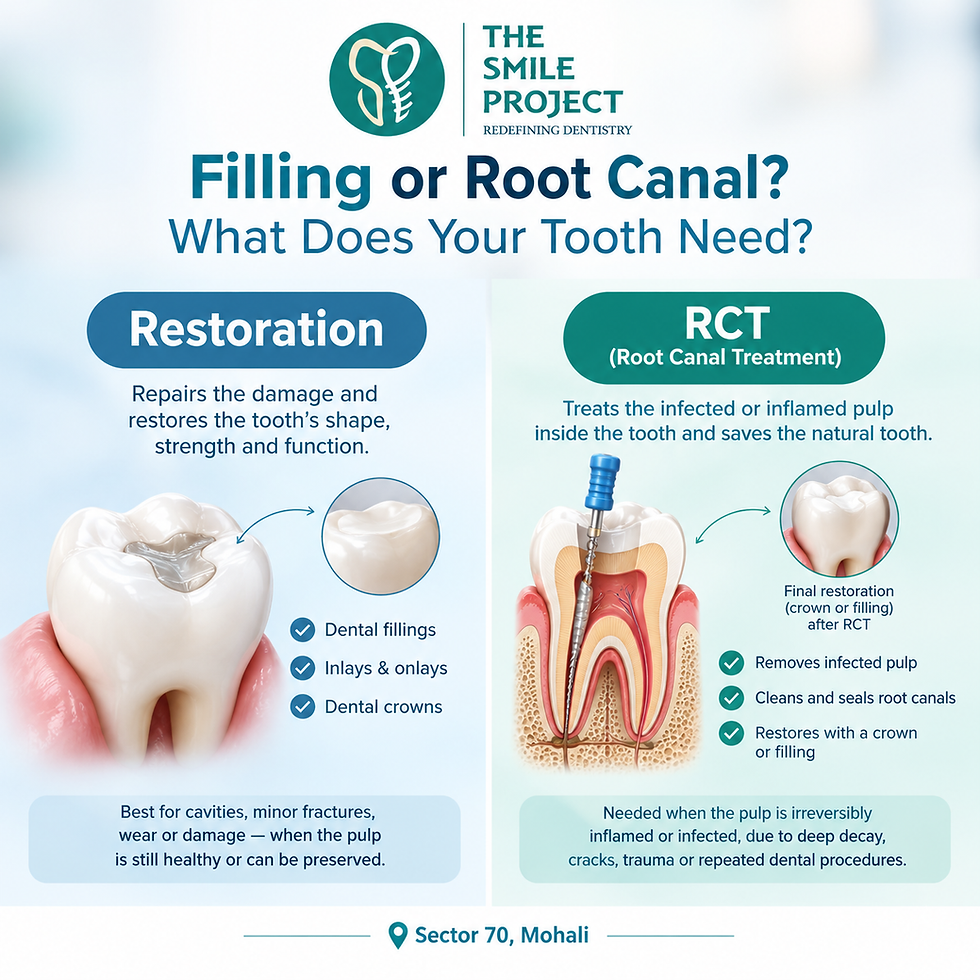
Inside every tooth is a soft tissue called the pulp, which contains nerves, blood vessels, and connective tissue. When bacteria invade this area due to deep decay, cracks, trauma, or repeated dental procedures, the pulp becomes inflamed or infected. As pressure builds inside the tooth, patients may experience:
Persistent toothache
Sensitivity to hot or cold temperatures
Sharp pain when biting
Throbbing discomfort that worsens at night
Swelling around the tooth or gums
This infection-driven pain is often the reason a root canal becomes necessary. During the procedure, under Local Anesthesia (It is a medication used to temporarily numb a specific area of the mouth before dental treatment), the dentist firstly removes the damaged pulp, then cleans and disinfects the root canals, and finally seals the tooth to prevent future infection.
Does a Root Canal Hurt?
Contrary to popular belief, most root canal procedures are not painful. Before a root canal procedure, the local anesthesia is carefully administered around the affected tooth to block pain signals from the nerves. Once the area is numb, the patient remains awake and aware but does not feel pain during the procedure. This allows the dentist to comfortably remove the infected tissue. While some pressure or vibration may be felt, sharp pain is uncommon.
Many patients are surprised to discover that the discomfort associated with the infection before treatment is often worse than the procedure itself.
What to Expect During the Procedure
During a root canal, patients may experience:
Mild pressure as dental instruments are used
Vibrations from specialized equipment
Temporary jaw fatigue from keeping the mouth open
These sensations are normal and should not be painful. If pain occurs, patients should notify their dentist immediately so additional anesthesia can be administered.
Normal Discomfort After a Root Canal
After treatment, it is common to experience:
Mild soreness around the treated tooth
Tenderness when chewing
Minor gum sensitivity
Slight discomfort for a few days
These symptoms are part of the body's natural healing response and generally improve within several days.
If you're preparing for a root canal, discussing your concerns with your dentist can help make the experience even more comfortable and stress-free. For personalized advice or painless root canal treatment, schedule a consultation, visit The Smile Project Dental Clinic (Sector 70, Mohali).


Comments